
Fix Your Garage Door Remote: Troubleshooting Tips
Home Maintenance, Garage Door Issues, Troubleshoot Garage
Garage Door Remote Opener Not Working? How to Troubleshoot and Fix It
When your garage door remote opener stops responding, it is more than an inconvenience—it can disrupt your routine and compromise home security. This guide walks you through practical, step‑by‑step ways to troubleshoot Garage Door problems, understand why a Remote Opener fails, and when to call a professional to Fix Garage Remote issues safely and effectively. If you already suspect a larger system problem, you can also explore dedicated garage door services for comprehensive repair or replacement options.
A non-responsive remote is usually fixable with a few focused checks.
Step 1: Start with the Simple Checks
Before assuming a major failure, begin troubleshooting your Garage Door Remote Opener with the basics. Many “Remote Not Working” complaints turn out to be quick, low‑cost fixes you can handle yourself in minutes.
Check the batteries. Weak or dead batteries are the most common cause of Garage Door Issues related to remotes. Replace all batteries with fresh, high‑quality ones and ensure they are installed in the correct orientation.
Inspect the remote for damage. Cracked cases, stuck buttons, or moisture exposure can cause the Remote Opener to fail. If a button feels jammed, gently clean around it with a soft cloth.
Test the wall control. If the wall‑mounted control inside the garage still opens and closes the door, the issue is likely limited to the remote itself rather than the entire Garage Door system. If both the wall control and remote are unreliable, it may be time to review your options for a new opener through specialized garage door services.
💡 Pro Tip: When you replace remote batteries, note the date. If you find yourself changing them frequently, it may indicate an aging remote or another underlying electrical problem that a professional should evaluate.
Step 2: Confirm Power and Safety Features on the Opener
If the batteries and remote casing look fine, the next step in troubleshooting your Garage Door is to confirm that the opener unit itself has power and is not locked out by a safety feature. Many homeowners overlook this when trying to Fix Garage Remote problems.
Check the power source. Make sure the opener is plugged in securely and that the outlet is working. Test the outlet with another device, such as a lamp or phone charger.
Look for a tripped breaker. If the opener has no lights or sounds, a circuit breaker may have tripped. Reset it and test the Garage Door again.
Verify the lock or vacation feature. Some wall controls have a “lock” or “vacation” button that disables remotes. If your Remote Opener is not working but the wall button light is blinking or shows a lock icon, consult the manual to unlock the system.
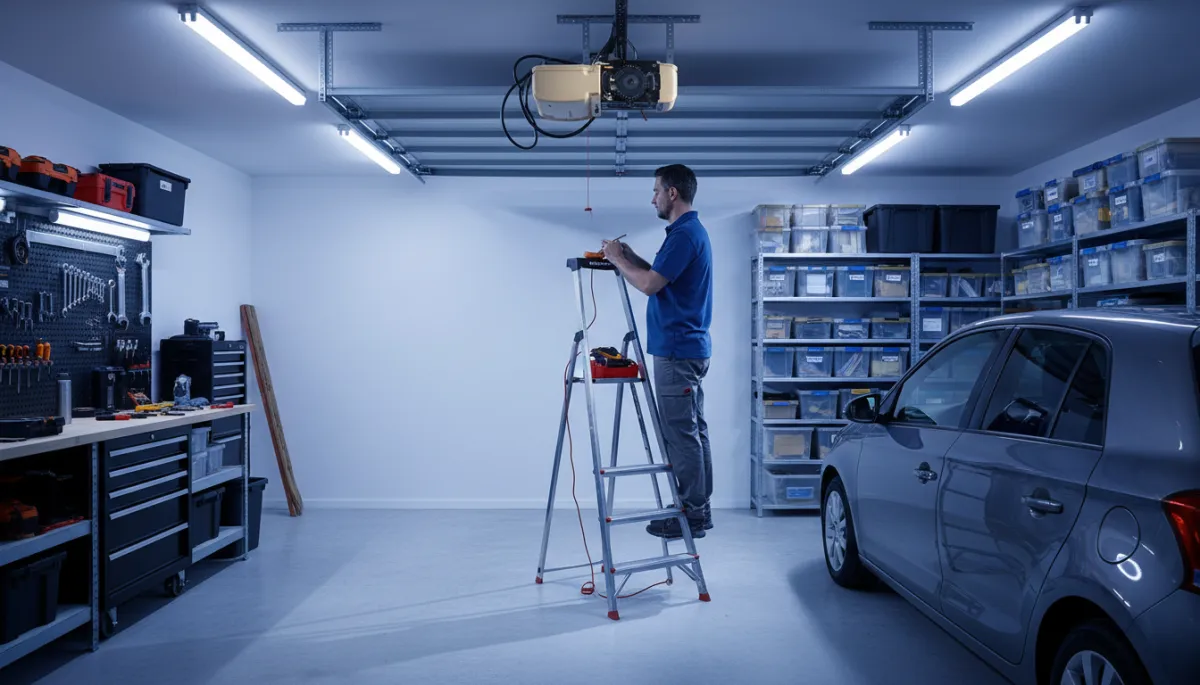
Verifying power and safety settings can resolve many remote-related opener issues.
Step 3: Inspect the Safety Sensors and Door Path
Modern Garage Door systems rely on safety sensors near the floor on each side of the door. If these sensors detect an obstruction or fall out of alignment, the opener may refuse to close the door when you press the remote. In some cases, this can be misinterpreted as the Remote Not Working, when in fact the opener is preventing unsafe operation.
Clear the path. Ensure there are no tools, bikes, or debris blocking the door’s travel path or the sensor beams.
Clean the sensor lenses. Dust, spider webs, or dirt on the sensor lenses can interrupt the beam. Gently wipe them with a soft, dry cloth.
Check alignment. Both sensor lights should be solid, not flickering. If one is off or blinking, adjust the sensor until the light steadies, then test the remote again.
⚠️ Safety Reminder: Never bypass or tape over safety sensors to “force” the door to close. If troubleshooting your Garage Door reveals sensor problems you cannot correct easily, schedule a professional inspection to maintain safe operation. You can easily contact a technician to review sensor alignment and overall door safety.
Step 4: Reprogram or Resync the Remote Opener
If the opener has power, the door operates from the wall control, and the sensors look good, the next logical step is to reprogram the remote. Over time, remotes can lose their connection to the opener due to power surges, battery changes, or accidental button presses. Reprogramming is a core part of any effort to Fix Garage Remote issues.
Locate the “Learn” or “Program” button on the opener unit (often near the antenna wire or under a small cover).
Press and release the Learn button. An indicator light will usually turn on or blink, signaling that the opener is in programming mode.
Within 30 seconds, press and hold the button on your Garage Door remote you want to program until the opener light flashes or you hear a click.
After programming, test the remote from different distances. If it works only when you stand very close to the door, there may be interference or antenna issues rather than a simple programming problem. At this point, working with an experienced garage door specialist—such as the technicians at sbpro.ca —can help diagnose more complex Garage Door Issues quickly, or you can review their full range of garage door services if you suspect the opener itself is failing.
Step 5: Consider Interference and Range Problems
Sometimes, the Remote Opener is functioning correctly, but radio frequency interference or environmental changes limit its range. This can make it feel like the Remote Not Working when you approach the driveway, even though it may still work at close range.
Look for new electronics. Recently installed LED lights, wireless routers, baby monitors, or other devices near the garage can interfere with the opener’s signal. Temporarily unplug new devices to see if range improves.
Inspect the opener antenna. A damaged or tucked‑away antenna wire on the opener can reduce signal strength. Ensure it hangs straight down and is not cut or kinked.
Test from multiple positions. Try activating the Garage Door from different spots in your driveway or walkway to identify whether range is consistent or limited to certain angles.
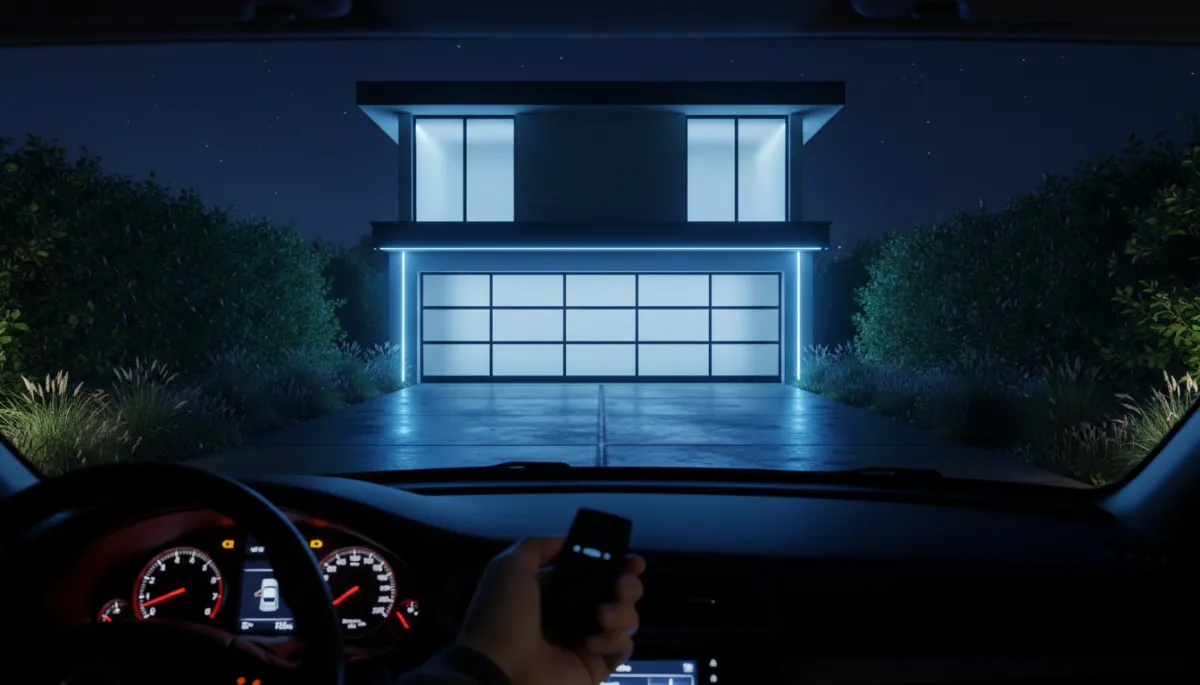
Range and interference issues often appear only when operating the door from the driveway.
When to Call a Professional for Garage Door Issues
While many remote problems are simple to resolve, some Garage Door Issues require specialized tools, parts, and training. If you have walked through the steps above and your Garage Door Remote Opener is still not working, it is time to bring in an expert rather than continuing to troubleshoot Garage components on your own.
The door opens or closes unevenly, shakes, or makes loud grinding noises, even when using the wall control.
You notice broken springs, frayed cables, or bent tracks while inspecting the system.
The opener light flashes in a repeating pattern that indicates a fault code you cannot clear.
Working on springs, cables, and opener internals can be dangerous without proper training. Partnering with a qualified service provider ensures your door operates smoothly, safely, and reliably. For homeowners seeking trusted, professional support in Canada, sbpro.ca offers comprehensive inspection, repair, and replacement services for Garage Door systems and remotes, including dedicated garage door services tailored to both minor and major issues.
Preventing Future Remote Not Working Problems
Once you Fix Garage Remote issues, a few simple habits can help prevent repeat failures and extend the life of your opener system. Treat your Garage Door as an essential moving part of your home, not just a convenience, and build light maintenance into your routine.
Replace remote batteries proactively every one to two years, rather than waiting for them to fail completely.
Keep remotes dry, avoid dropping them, and store them out of direct sunlight to protect internal circuits.
Schedule a professional Garage Door tune‑up every year or two to lubricate moving parts, check balance, and verify all safety systems, including remotes and keypads. You can book this kind of preventative visit directly through the garage doors service page or by using their contact form.
📌 Key Takeaway: Most remote failures are preventable with basic care and periodic professional maintenance. A well‑maintained Garage Door system responds more reliably to every Remote Opener you use.
Take Action: Restore Reliable Access to Your Garage
A Garage Door remote opener not working is frustrating, but it rarely means you need to replace your entire system. By following the structured troubleshooting steps above—checking batteries, confirming power, inspecting sensors, reprogramming the remote, and evaluating interference—you can often restore smooth operation quickly and safely. When the problem goes beyond a simple Fix Garage Remote task, a professional technician can diagnose the root cause and recommend a lasting solution, often starting with an assessment of your opener and hardware through specialized garage door services.
If you are unsure at any stage, or if your Garage Door shows signs of mechanical damage, do not hesitate to seek expert help. Visit sbpro.ca to schedule a professional assessment, request a quote, or learn more about modern opener and remote options. You can go directly to their garage doors service page to review solutions, or use the contact us form to connect with a specialist. Taking timely action today will help you avoid unexpected lockouts, improve home security, and ensure your Garage Door works reliably every time you press the remote.